

















Former Chairman of the State Revenue Committee, Davit Ananyan, commented on the controversy surrounding Armenia’s first fuel imports from Azerbaijan, arguing that the debate is not only emotional and political, but also reveals deeper, systemic concerns from an economic policy standpoint.
In a Facebook post, Ananyan emphasized that "the economy cannot be 'apolitical'."
“Let’s start with the obvious. Countries that don’t produce essential goods, such as energy resources, are objectively forced to import them. In this sense, diversification of import sources is not inherently negative. On the contrary, from a narrow economic perspective, it can serve as a tool to reduce risks,” he wrote.
However, Ananyan stated, this is where simple economics end and real political-economic analysis begins. He noted that all imports, regardless of product type, contribute to the gross domestic product (GDP) of the exporting country.
“In other words, when Armenia imports Azerbaijani gasoline, the money paid by Armenian consumers, once converted into foreign currency, directly supports the formation of Azerbaijan’s GDP. This is not a moral judgment or rhetorical device. It's a classical macroeconomic fact,” he explained.
Responding to the argument that this is a private business decision, Ananyan stressed that the private sector operates within the institutional framework established by the state.
He argued that a responsible business cannot ignore matters of national security.
“In our understanding, a corporately responsible business is one that:
- has a strategic goal of developing national capital;
- engages in export-oriented or import-substituting activities;
- and fundamentally avoids funding the economies of countries with which Armenia lacks diplomatic ties, or which are openly hostile,” he stated.
Ananyan underscored that this approach is not idealism but economic rationality rooted in the national interest. He criticized the absence of a clear economic policy in Armenia, noting the lack of defined criteria for encouraging or restricting imports from specific countries.
“When a state fails to define the framework of its national economic interest, the market takes over, driven by short-term profits. And short-term profits never build security, sovereignty, or long-term development,” he warned.
In conclusion, Ananyan asserted that the import of Azerbaijani gasoline is not merely a transaction but a manifestation of deep, systemic policy failures.
“When the economy is presented as apolitical, in reality, the country becomes a state with an economy divorced from politics,” he concluded.
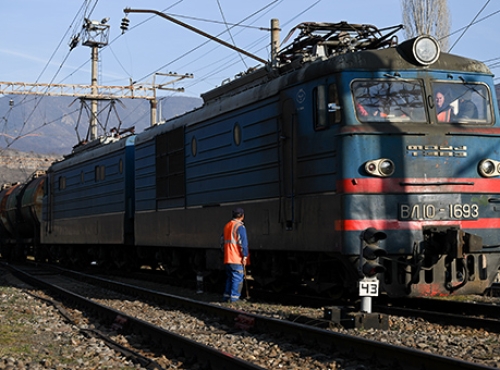
Prime Minister Nikol Pashinyan earlier welcomed the arrival of a fuel-laden train from Azerbaijan. Azerbaijani media reported that the first shipment of petroleum products left for Armenia on December 18. According to an agreement reached on November 28 between Azerbaijani Deputy Prime Minister Shahin Mustafayev and Armenian Deputy Prime Minister Mher Grigoryan in Gabala, the shipment includes 22 wagons of AI-95 gasoline produced by state oil company SOCAR. The train has already arrived in Armenia.