

















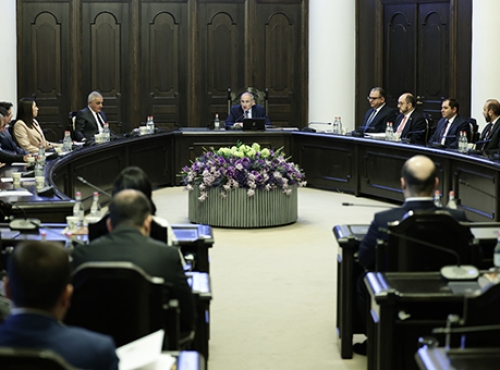
Prime Minister Nikol Pashinyan assured during a cabinet meeting that the issue of rising liquefied petroleum gas (LPG) prices will be resolved by December 2026.
Responding to public concerns, Competition and Consumer Protection Commission Chairman Gegham Gevorgyan described the annual LPG price increase as a typical seasonal pattern, not an anomaly. “Every year when the Lars checkpoint faces disruptions, transport costs rise. It’s a usual process; LPG is cheaper in April–May and more expensive in December. There is no shortage or extraordinary issue here,” he explained, according to 1lurer.am.
Pashinyan said the solution lies in securing multiple supply routes and sources as part of broader peace-oriented infrastructure efforts. “That’s the key, no need to look further. And we are moving in that direction. Rest assured, this December we won’t face the same issue either,” he said.
Economy Minister Gevorg Papoyan elaborated that Armenia typically imports LPG through Upper Lars (Russia) and from Iran, but both routes have recently faced complications due to weather and other logistical factors.
“In one case, it’s heavy snowfall, in the other, we know the context. Our recommendation to importers has been to switch to railway transport. We believe this will solve the issue for good, as railways are not vulnerable like the Lars route,” Papoyan stated.
Deputy Prime Minister Mher Grigoryan added that railway-based transportation is likely to become a “civilized” alternative for future imports. “I think the market will soon adapt to the current reality, and we’ll see more systematic, stable transport routes,” he noted.
Concluding the discussion, Pashinyan reaffirmed that by December 2026, seasonal LPG price hikes will no longer be a concern. He emphasized the strategic role of the TRIPP corridor, around which Armenia has already secured key agreements, according to RFE/RL.
In recent days, while gasoline and diesel prices have dropped, LPG prices have increased from 190 drams to 230–240 drams per liter. However, government officials ruled out any link between the rise and fuel imports via Azerbaijan.