













According to a newly published report by international rights organization Human Rights Watch, the human rights situation in Azerbaijan continued to deteriorate in 2025.
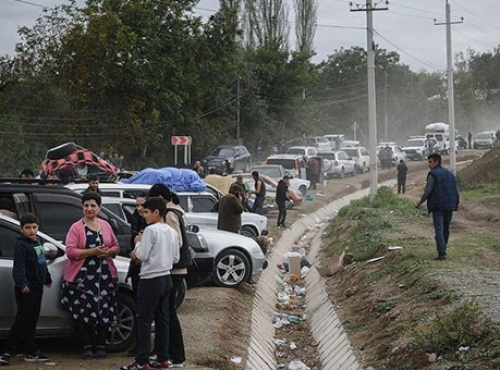
Despite previously stated commitments, Azerbaijan took no meaningful action to ensure the safe and dignified return of ethnic Armenians who fled Nagorno-Karabakh in September 2023, nor to restore their property rights, reports Factor.am .
The report also references the Washington Declaration signed in August by Armenia and Azerbaijan under U.S. mediation. It outlined a broad political framework for ending the decades-long conflict over Nagorno-Karabakh, normalizing diplomatic ties, and fostering regional cooperation.
The agreement granted the U.S. exclusive rights to develop a 42-kilometer trade route through Armenian territory, linking Azerbaijan to its exclave, Nakhichevan. It also effectively led to the dismantling of the OSCE Minsk Group format, previously co-chaired by the U.S., Russia, and France.
The report highlights intensified pressure by Azerbaijani authorities on independent journalists, opposition figures, and civil society members to silence critical voices. Notably, even journalists and bloggers living abroad have faced criminal charges or been sentenced in absentia after flawed trials.
Human Rights Watch notes that these developments have significantly restricted civil society’s operational space. In 2024, Azerbaijani authorities suspended the work of several international organizations affiliated with the UN and revoked accreditations for international media outlets. Although official Baku cited international alignment as justification, HRW asserts that these actions have undermined transparency and accountability.
The report states that systemic crackdowns on independent media escalated by late 2023. Journalists from MeydanTV, AbzasMedia, and ToplumTV were arrested on financial crime charges. Some were sentenced to lengthy prison terms, while investigations into others continue. Certain international media outlets were also suspended, and a local outlet shut down, citing financial crisis.
Political activists, rights defenders, and scholars were also targeted, facing criminal prosecution. Many opposition figures received long prison sentences amid widespread due process violations.
The report stresses that denying permits for peaceful protests and detaining participants has become routine. In some instances, police confiscated demonstrators’ personal belongings and electronic devices by force.
HRW further noted that numerous allegations of torture and police abuse have not been properly investigated. Some journalists and activists reported experiencing violence from law enforcement, yet these cases were not examined independently or effectively.
The organization also highlighted that legislative changes passed in 2024 imposed additional restrictions on the funding of media and civil society organizations, further tightening control over government critics.
On September 19, 2023, Azerbaijan launched a large-scale attack on Artsakh, subjecting the region to heavy shelling. One day later, on September 20, Artsakh authorities agreed to a ceasefire under Russian peacekeepers’ mediation, accepting Baku’s terms, including disarmament and the dissolution of the Republic of Artsakh. The attack left 223 people dead, including 20 civilians—6 of them minors. Beginning September 24, more than 100,000 ethnic Armenians were forcibly displaced to Armenia. According to reports, only about 20 Armenians remained in Artsakh; 11 later returned to Armenia, one died, and one was arrested.