















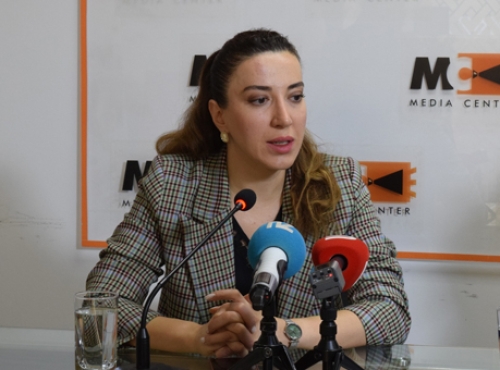
Siranush Sahakyan, a lawyer representing Armenian captives at the European Court of Human Rights, stated that the French National Assembly’s resolution calling for the release of Armenian prisoners held in Azerbaijan is a significant political stance that reflects the French legislature’s view on the matter, reports Aysor.am .
She emphasized that the resolution should be seen as a “bargaining chip” in diplomatic efforts.
"Given France’s considerable influence both politically and geographically, steps like this can serve as key factors in increasing political pressure. It is positive that France and other countries publicly express their stance. At the same time, it must be understood that Azerbaijan is not constrained by such declarations and will not respond to them unless they are backed by instruments that threaten its vital interests. Political statements alone do not lead to changes in Baku’s behavior," she noted.
Sahakyan argued that beyond declarations, France should adopt a firm anti-Azerbaijani orientation in its foreign policy as long as Baku continues to violate its humanitarian obligations and holds Armenian captives.
"Overall, from the perspective of the captives’ release, this resolution is a meaningful contribution. Moreover, rights advocates and diplomats can effectively use such positions. In international human rights institutions and diplomatic interactions, it is essential to rely on official political or legal documents that assess the issue. This resolution should also be seen as a strategic tool in the hands of those engaged in both foreign and public diplomacy," Sahakyan added.
The French National Assembly unanimously passed a resolution calling for the release of Armenian prisoners held in Azerbaijan. The resolution, authored by Laurent Wauquiez and submitted by the France-Armenia Friendship Group, describes the ongoing trials of Armenian detainees as part of Azerbaijan’s broader policy of denying Armenia’s existence. It frames this as a continuation of Azerbaijan’s strategy of eliminating the Armenian population in Nagorno-Karabakh and other areas under its control, alongside the systematic destruction of Armenian heritage.