
















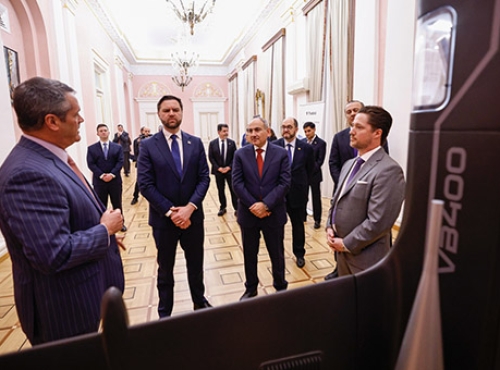
In a detailed article, the BBC highlighted U.S. Vice President J.D. Vance’s visit to Armenia as evidence of accelerating ties between Yerevan and Washington and a broader shift away from Moscow. During his visit, Vance expressed support for Prime Minister Nikol Pashinyan ahead of the June elections and announced that the Armenian military will receive U.S.-made V-Bat reconnaissance drones, also supplied to Ukraine.
“I know Prime Minister Pashinyan has elections coming up. I don’t want to comment on that, but if my support means anything, he has it, because he’s building a long-term partnership that will bring stable peace with [Azerbaijan],” Vance said at a joint press conference with Pashinyan.
During the visit, the U.S. and Armenia also reached an agreement on civil nuclear cooperation, which opens the door to exporting U.S. nuclear technology and constructing small modular reactors in Armenia.
It was also revealed that the Armenian-American startup Firebird plans to invest an additional $4 billion in a national supercomputer and data center project, supported by a U.S. government license to export 41,000 Nvidia chips. The initiative is set to become the largest ICT investment in Armenia’s history.
The $11 million supply of V-Bat drones is being called the visit’s most significant announcement. It marks the first time U.S. military equipment is officially delivered to Armenia—a nation traditionally allied with Russia but now designated a strategic partner of the United States and aspiring to join the European Union.
Vance and Pashinyan also discussed unresolved issues in the Armenia–Azerbaijan peace process, particularly the fate of Armenian prisoners held in Baku. Vance noted that he intended to raise the issue with Azerbaijani officials during the next leg of his trip.
The BBC report adds that Vance’s show of support suggests that “the West has a single preferred candidate in Armenia’s upcoming parliamentary elections,” regardless of internal divisions between the Trump administration and European leaders.
Joshua Kucera, senior South Caucasus analyst at Crisis Group, said EU leaders are also backing Pashinyan. He noted that in December, the EU granted Armenia funding to fight disinformation, essentially supporting the current government.
He stressed that while Armenia accuses Russia of meddling in its domestic affairs, the U.S. and EU have been open about their preferences: “There’s only circumstantial evidence of Russian interference, while the EU and U.S. are openly involved.”
Kucera added that both the EU and Vance clearly tie Pashinyan’s continued rule to progress in the peace process with Azerbaijan: “This means peace is becoming person-specific, which undermines its long-term stability.”
Parliamentary elections in Armenia are scheduled for early June. In May, Armenia is expected to host the first EU–Armenia summit, with several European leaders set to attend. BBC sources say the event is intended to demonstrate public support for Pashinyan ahead of the elections.
“Whatever the motivations behind Trump’s brokered deal between Armenia and Azerbaijan, the outcome is tangible. His personal involvement helped both sides find the political will to move toward normalization, including small-scale trade exchanges,” Kucera noted.