













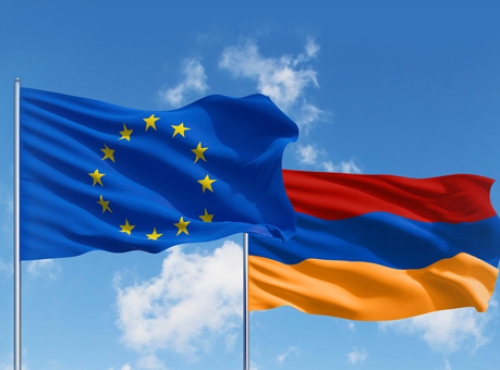
The European Union is preparing to assist Armenia in the parliamentary elections scheduled for June by first deploying a “rapid response team” against “hybrid threats” to counter Kremlin disinformation, and possibly later establishing a more permanent civilian mission, RFE/RL reports.
According to the outlet, it has obtained a letter from Armenia’s foreign minister to Brussels, in which Ararat Mirzoyan on February 13 requested the dispatch of a rapid response team to Yerevan.
The EU previously deployed a similar team of around 20 members in Chisinau during last year’s parliamentary elections to help Moldovan authorities detect and respond at an early stage to disinformation spread from Russia on social media platforms.
Both Brussels and Chisinau assessed that initiative as successful, and the EU now intends to apply the same mechanism in Armenia ahead of key elections that Russia is expected to attempt to influence.
Diplomatic notes drafted following discussions in Brussels indicate that the EU plans to “support the strengthening of Armenia’s democratic resilience and information integrity both ahead of the June 2026 elections and during the ongoing peace process between Armenia and Azerbaijan,” adding that “the support offered to Armenia should be clearly aimed at reducing and mitigating destabilizing activities by Russia.”
According to RFE/RL, EU member states have also addressed the diplomatic corps and the European External Action Service, urging them to “continue engagement with Azerbaijan to explain the purpose of the EU’s support to Armenia and to stress the need to avoid negative impact on the peace process.”
Baku has previously expressed concern over both non-lethal military assistance provided by the EU to Armenia in recent years and the EU monitoring mission operating in Armenia since 2023 along the Armenian side of the border with Azerbaijan, mandated to build confidence and observe the situation.
If approved, the new mission would primarily focus on hybrid threats, including “protecting the integrity of the electoral process and possibly a constitutional referendum that could follow immediately after.”
Several EU diplomats interviewed by RFE/RL said the parties aim to launch the mission before the EU-Armenia summit scheduled for May 4 in Yerevan. This means a decision would need to be taken in March, though the process is not straightforward.
In practice, EU member states must adopt two separate decisions — the first for technical approval and the second for actual deployment. Although no country has so far voiced open objections, diplomats noted that Armenia does not enjoy the same level of European and international support as Moldova, which holds official EU candidate status.
Hungary has previously blocked several EU decisions related to Armenia, often arguing that Azerbaijan should receive what has been allocated to Armenia.
Diplomatic circles in Brussels hope that this time Azerbaijan may show a more positive attitude toward a new EU mission in Armenia, as it would be linked to the U.S.-led peace process and efforts to normalize Armenian-Azerbaijani relations.
Another potential obstacle could be limited funding. Several European diplomats emphasized that the EU budget has restricted capacity, as Brussels is simultaneously seeking to extend or approve other missions in Egypt, Gaza, Jordan and Lebanon.
If approved, according to the outlet’s sources, the new EU mission in Armenia would be small in size, consisting mainly of a central team of several experts, while most personnel would be drawn from the existing border monitoring mission to support those experts.