












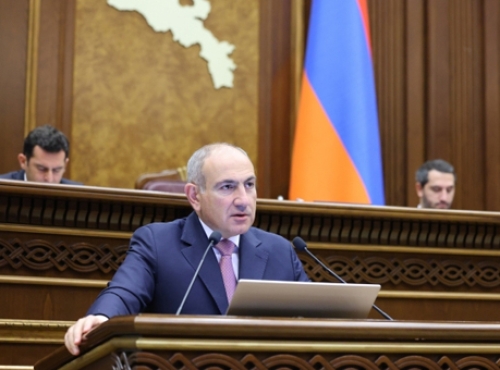
Armenian Prime Minister Nikol Pashinyan has said that voters in the upcoming parliamentary elections must decide whether the Karabakh movement should continue, arguing that it inevitably leads to war.
Speaking during a question-and-answer session in parliament, Pashinyan addressed criticism that his earlier statements—warning of war if the Civil Contract party is not elected—are perceived as threats, according to Armenpress.
He recalled that in 2020, he was criticized for not warning the public about risks and said he has drawn conclusions from that experience.
“In this election, the people must answer the following: will the Karabakh movement continue or not? Today, Civil Contract is the only political force that, as a majority, has decided not to continue the Karabakh movement. All other forces say they will continue it. The people must decide. If they decide the Karabakh movement continues, that means war, because the Karabakh movement is war. If they decide for peace, then we will not continue the Karabakh movement. It is a very simple choice,” Pashinyan said.
He stressed the importance of “speaking plainly” with citizens.
Referring to the Declaration of Independence, the prime minister said it is “not a declaration of independence, but a declaration of conflict and dependence.”
“We all emerged from the Karabakh movement as political actors. But if we do not confront this and change, our historical fate will not change either,” he added.
Pashinyan also stated that opposition forces are currently advocating a revision of the peace policy.
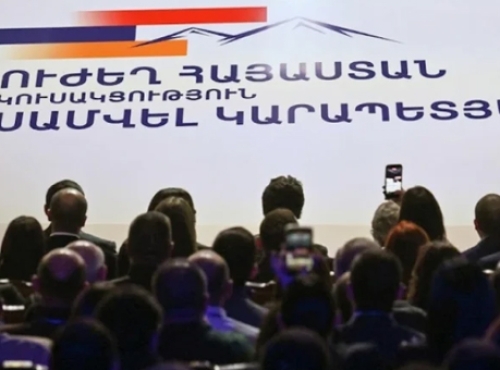
“Today, all forces in the opposition camp are operating within the logic of revising peace. They themselves speak about imposing peace by force and similar approaches. This inevitably leads down the path to war,” he said, referring to the political forces associated with former President Robert Kocharyan, businessman Samvel Karapetyan, and Prosperous Armenia leader Gagik Tsarukyan.
According to the prime minister, these forces do not accept the need to preserve the existing peace framework and instead propose renegotiating it, which he said opens the way to escalation.
“They do not believe this peace should be maintained and nurtured. They say it must be renegotiated, that it is not sufficient. This clearly opens the path to escalation. In today’s geopolitical environment, wherever there is even a small opening for war, it will enter. We see what is happening in the world: where there is a crack, war enters through it. The forces you mention are not talking about cracks—they are opening the doors wide,” Pashinyan stated.