

















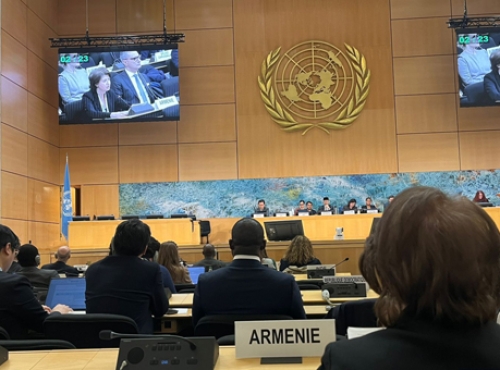
The United Nations Human Rights Council has unanimously adopted Armenia’s Prevention of Genocide resolution at its 61st session, underscoring early warning and coordinated global action.
The resolution, submitted biennially, is based on the Convention on the Prevention and Punishment of the Crime of Genocide and plays an important role in translating its provisions into practical UN policy processes.
The document aims to promote an early warning approach in genocide prevention and defines a framework of risk factors, including hatred, discrimination, and impunity. It also places particular emphasis on the need for timely response, which can significantly help prevent the escalation of violence.
By keeping genocide prevention on the international agenda, the initiative once again highlights its importance among modern diplomatic priorities. It contributes to strengthening international justice mechanisms and incorporates developments and challenges that have required increased attention during the given period.
This year’s version proposes, within the framework of the UN80 reform process, to reinforce the mandate for genocide prevention. It also draws attention to the fact that algorithmic systems and artificial intelligence tools may contribute to the spread of disinformation and hate, influencing information flows and undermining human rights.
The Prevention of Genocide resolution has also made an important contribution to promoting the universal ratification of the Genocide Convention, encouraging states that have not yet joined it to do so without delay.
As in previous years, the resolution presented by Armenia received broad support from UN member states, encompassing all regional groups. This support was reflected in the large number of co-sponsors, which reached around sixty at the time of adoption.
The document reaffirms Armenia’s call to the international community and the entire world to unite and prevent the threat of genocide.