












The Independent Observer mission has issued a statement presenting its assessment of the proposed amendments to the Electoral Code, noting that at this stage it has not submitted a proposal to restore the ban on the use of personal names.
According to the statement, on April 6, 2026, MPs from the Civil Contract faction introduced a draft law addressing two issues that arose from amendments adopted on December 5, 2024, but were identified only after parliamentary elections were scheduled.
The first issue concerned the grounds for invalidating ballots: the previous provision allowing envelopes to be voided if they contained foreign objects had been removed.
The second issue stemmed from what observers described as a drafting error due to a lack of public discussion: restrictions on naming electoral alliances had been removed, while similar rules remained in place for local elections and party names.
Both issues were identified and raised by observer missions.
However, the mission noted that the urgent approach to resolving these problems cannot be assessed unequivocally.
1.The possibility of placing additional items in envelopes under coercion or vote-buying schemes could seriously undermine the principle of free elections and enable effective monitoring of voters’ choices.
The Independent Observer stated it was ready to continue advocating for closing this loophole until voting begins and welcomed its prompt correction.
Moreover, it believes that alongside these changes, it was urgent to improve provisions on transparency and accountability in campaign financing, which had been under discussion since late last year. The mission stressed that well-founded changes aimed at election integrity should not depend on timing.
2.The proportional electoral system should be based on competition between parties, programs, and ideologies, rather than personality-centered approaches, which remain prevalent in Armenia’s political culture.
For this reason, amendments adopted in 2022 had banned the use of personal names, place names, and offensive expressions in alliance names, with similar restrictions applied to party names.
However, for unclear reasons and without justification or discussion, this provision was omitted. While acknowledging that restoring it would reintroduce the restriction, the mission emphasized that it had not proposed its return at this stage and believes such a change should not be treated as a priority, as it could place an additional burden on some electoral participants.
From the standpoint of protecting voters’ rights and democratic institutions, the mission called on all political forces to refrain from actions, rhetoric, or behavior that could undermine the guarantee of free and fair elections.
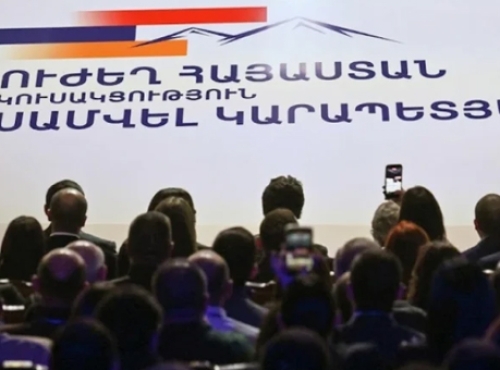
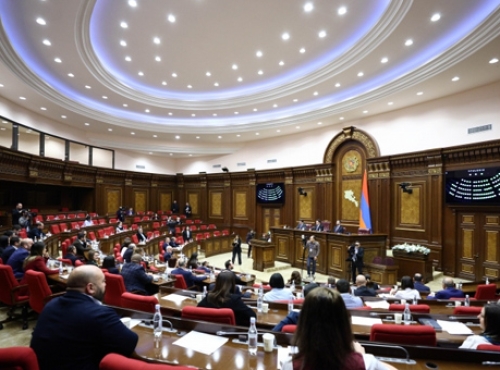
It should be noted that the National Assembly has already adopted, in a second reading, amendments to the Electoral Code banning the use of personal names in alliance titles.
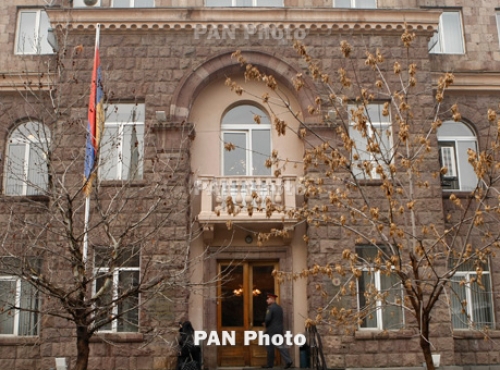
During discussions, representatives of the Strong Armenia party staged a protest outside the parliament building, criticizing the timing of the changes just two months before elections and calling the initiative undemocratic.
Opposition factions Hayastan and I Have Honor also opposed the initiative, arguing that changing the “rules of the game” shortly before elections is unacceptable.