










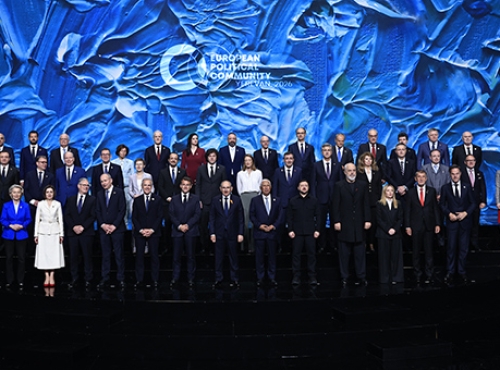
Armenia, long considered a close ally of Russia in the South Caucasus, is hosting two unprecedented summits with European leaders, according to a BBC report.
For a country with a population of under three million, the significance of the event is hard to overstate. Armenia is a member of the Eurasian Economic Union, initiated by Russian President Vladimir Putin, and hosts a Russian military base on its territory.
Yerevan is hosting the European Political Community summit, attended by more than 30 European leaders and Canada’s prime minister, followed by the first-ever EU–Armenia bilateral summit with the participation of European Commission President Ursula von der Leyen and European Council President António Costa.
The report notes that Armenia remains significantly dependent on Russia in energy terms, purchasing gas at preferential rates—$177.5 per 1,000 cubic meters compared to about $600 in Europe, as highlighted by Putin during a recent meeting with Prime Minister Nikol Pashinyan.
It raises the question of how a country so closely tied to Russia has become a central platform for European leaders. According to the article, a turning point came after the 2023 war between Armenia and Azerbaijan, when Russia remained passive despite having peacekeepers in the region.
Armenian officials concluded that the existing security architecture was not functioning effectively. EU mediation later contributed to border recognition efforts and the deployment of a civilian monitoring mission.
The European Union has since deepened engagement with Armenia, while public demand for closer ties with the EU has increased. In March 2025, Armenia adopted a law initiating the process of EU accession.
At the same time, the Armenia–Azerbaijan peace process accelerated, culminating in a landmark agreement signed at the White House, alongside the launch of a major transport corridor initiative connecting the region to European markets.
However, the report emphasizes that the peace process remains fragile, and Armenia’s closer ties with Europe have created diplomatic challenges. Azerbaijan recently suspended relations with the European Parliament over resolutions concerning displaced Armenians and detainees.
It also notes that Moscow is watching Armenia-EU rapprochement with visible dissatisfaction.
During a Kremlin meeting, Putin reportedly reacted skeptically to Pashinyan’s remarks about freedoms in Armenia and reiterated that EU integration is incompatible with membership in the Eurasian Economic Union.
In the days leading up to the summit, Russia banned imports of Armenian mineral water—described by experts as a typical example of hybrid pressure tactics.
Cybersecurity experts also reported patterns of cyberattacks and disinformation campaigns, including hacking incidents and impersonation attempts targeting officials and civil society actors.
The EU has approved a new two-year civilian mission aimed at countering Russian disinformation, cyberattacks, and illicit financial flows, particularly ahead of Armenia’s parliamentary elections.
Council of Europe Secretary General Alain Berset warned that Armenia’s democratic institutions are under pressure, with key risks including external interference, disinformation, and online polarization.
While European leaders have pledged support, including potential visa liberalization and civic initiatives, no clear timelines for EU membership, security guarantees, or alternatives to Russian gas have been established.
In this uncertain context, Armenia’s effort to balance relations between Russia and the West remains ongoing.