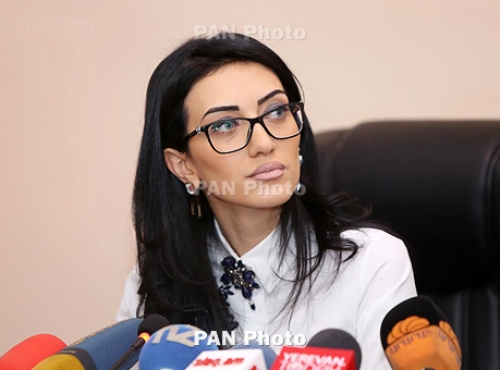
















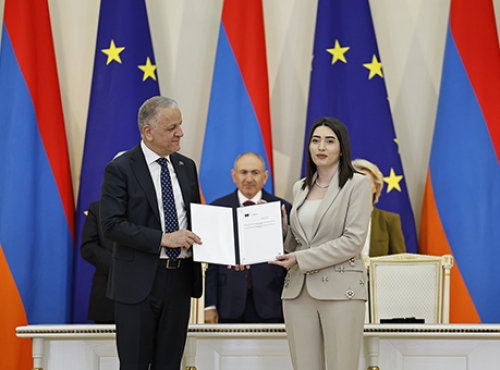
Head of the EU Delegation to Armenia Vassilis Maragos handed over the European Commission’s progress report on the implementation of the visa liberalization action plan to Interior Minister Arpine Sargsyan.
The European Commission praised Armenia’s progress, emphasizing the authorities’ clear political commitment to carrying out the required reforms.
At the same time, recommendations were presented to address remaining gaps and ensure the effective continuation of the process, according to 1lurer.am .
It is noted that the Armenian government, coordinated by the Interior Ministry, has begun implementing the necessary legislative and policy changes, while work on document security and migration management has reached an advanced stage.
The report details achievements across several areas, including document security, border and migration management, public safety, and the protection of fundamental rights.
It outlines Armenia’s progress in four key areas of the action plan:
Document security: A public-private partnership agreement has been concluded to modernize the biometric identification system, ensuring that future identity documents will meet the highest standards set by the International Civil Aviation Organization (ICAO). In addition, Armenia adopted a new law on the population register in July 2025, enabling the creation of a unified and secure electronic registry.
Border, migration, and asylum management: Armenia is actively developing its Integrated Border Management strategy for 2026–2029 and has advanced in digitalizing services. Since January 2026, an electronic system for citizenship processes has been launched, while full digitalization of work and residence permits for foreign nationals is underway. Amendments to the law on refugees and asylum are in the final stages. Armenia continues strengthening cooperation with EU and non-EU countries on readmission.
Public order and security: Since 2018, Armenia has significantly strengthened its anti-corruption legal and institutional framework in line with international standards. The launch of the 2026–2033 crime prevention strategy reflects a commitment to evidence-based policy, institutional coordination, and targeted preventive measures. A new anti-trafficking action plan is expected in 2026. The EU also positively assessed the creation of an independent data protection authority aligned with European standards.
Fundamental rights: Armenia is developing laws on preventing discrimination and on national minorities to align with European standards. In 2025, new child protection legislation was adopted to ensure more comprehensive safeguards against violence and exploitation.
The European Commission stressed that future assessments will depend on tangible results and the full implementation of all benchmarks.
It will continue monitoring progress, involving experts from EU member states and organizing additional evaluation missions in Armenia.
The EU also reaffirmed its continued support for Armenia’s reforms through technical and financial assistance, including under the Resilience and Growth plan.
The analysis concludes that Armenia is at an advanced stage in document security, border and migration management, and asylum policy, while showing steady progress in public security and fundamental rights.
European Commission President Ursula von der Leyen also highlighted the importance of the report during the summit, expressing confidence that the process will continue successfully and achieve its goals.