












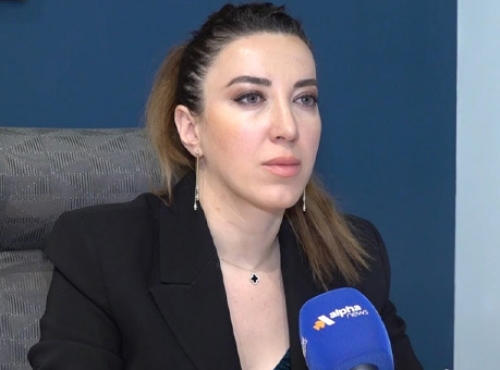
The return of Armenian detainees has become politicized internationally and turned into part of hostage diplomacy, Siranush Sahakyan, the representative of Armenian captives’ interests at the European Court of Human Rights, said.
She stressed that their release remains the top priority, Aysor.am reports.
A statement from Ruben Vardanyan, who remains in Azerbaijani captivity, was circulated from Baku regarding Human Rights Defender Anahit Manasyan’s response. David Ishkhanyan also addressed Armenia’s ombudsman from a prison in Baku.
“Among other violations, this issue is also being raised. Appeals on this matter were also submitted to the Azerbaijani ombudsman. This may be viewed as an opportunity for Azerbaijan’s ombudsman, who has consistently concealed abuses committed against Armenians, to demonstrate internationally that rights violations involving Armenians are also being addressed through her intervention.
I believe that, with the correct approach, she should be interested in ensuring the implementation of this right, especially since the European Court of Human Rights has required the Azerbaijani government in all cases to provide the court rulings.
Once the court receives the materials, the Armenian side inevitably gains access to them. Refusing to provide them will only worsen Azerbaijan’s position and simplify future proceedings at the ECHR,” Sahakyan said.
She emphasized that regardless of other issues, the most urgent matter remains the detainees’ release, and no other topic can take precedence. Referring to Ruben Vardanyan’s statement, she noted that it clearly raises the issue of responsibility concerning individuals held in Baku.
“This is a rather delicate and professional issue from the standpoint of the ombudsman’s mandate. Armenia’s Human Rights Defender has no authority to examine the actions of Azerbaijani state bodies and naturally is not a legal entity capable of issuing binding recommendations to Azerbaijani authorities.
At the same time, it is understandable that people in captivity first turn to the Human Rights Defender. In this case, the primary addressee should be the Foreign Ministry and Armenia’s executive authorities in general, since meetings with citizens can be ensured through their mediation, and that right is enshrined in the Vienna Conventions.
Ruben Vardanyan’s message essentially concerns this very question: if not the ombudsman, then which state institution assumes responsibility for these processes?” she said.
Commenting on views that electoral processes could influence detainees’ return, Sahakyan said there are currently developments whose combination could create a more favorable environment for returning detainees or carrying out other humanitarian missions.
“The issue of detainees’ return has been politicized externally and become part of hostage diplomacy. For that reason, resolving the issue is often linked to satisfying certain political demands. Those demands change, but the general logic is that meeting specific conditions during negotiations may lead to progress.
International involvement supports the process to some extent and increases visibility of the issue. I do not consider elections the only or exclusive dominant factor, because returns have also occurred independently of electoral processes.
It is also possible that other political matters, such as constitutional reform, are more significant for Azerbaijan than election results.
The problem is politicization abroad, which prevents the issue from being resolved solely within humanitarian logic. The release of detainees often depends on political dynamics that may either facilitate or slow the process,” Sahakyan said.
Baku’s court sentenced Ruben Vardanyan to 20 years in prison.
Former Artsakh President Arayik Harutyunyan was sentenced to life imprisonment. Former Defense Army commander Levon Mnatsakanyan and former first deputy commander Davit Manukyan also received life sentences, along with former Artsakh Foreign Minister Davit Babayan and National Assembly Speaker Davit Ishkhanyan.
Former Artsakh presidents Arkady Ghukasyan and Bako Sahakyan were sentenced to 20 years in prison.
Madat Babayan and Melikset Pashayan received 19-year prison sentences, Garik Martirosyan 18 years, Davit Alahverdyan and Levon Balayan 16 years, while Erik Ghazaryan, Gurgen Stepanyan and Vasily Beglaryan were sentenced to 15 years in prison.