












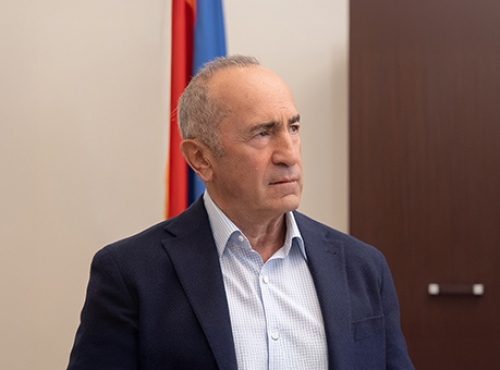
Speaking in Geghamasar, Hayastan bloc prime ministerial candidate Robert Kocharyan said that after the war, serious security and economic problems had emerged in the province, while the most dangerous issue was that the neighboring state had claims to these territories.
“When it (Azerbaijan) says ‘Western Azerbaijan,’ it means these territories. When it says ‘Goycha’ is lake, it has these territories in mind,” he said, Armenpress reports.
According to Kocharyan, Armenia must properly assess the geopolitical situation to avoid new dangers.
“If we choose the wrong direction, if we fail to understand what is happening, we may indeed face another disaster,” he said.
The bloc’s leader also addressed the lack of jobs in border settlements, noting that residents engaged especially in cattle breeding have faced difficulties because of restricted access to pastures.
“Jobs must be created here. This could be agriculture, it could also involve privileges for building small and medium-sized industrial facilities, but the most important issue is jobs,” Kocharyan said.
According to him, keeping the population in border settlements is an important component of the country’s security.
“Our task is the following: to ensure in all border regions that people stay and work. A small country simply has no other way to preserve its own state. Armenia cannot be only Yerevan,” he said.
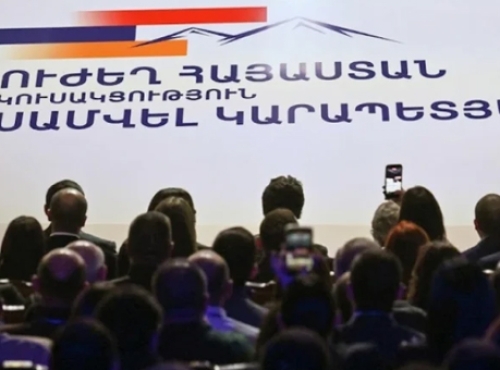
The bloc has also presented its main campaign priorities for the 2026 parliamentary elections, including strengthening the army and security system, maintaining strategic relations with Russia, supporting small and medium-sized businesses, introducing agricultural insurance, reducing the daytime electricity tariff, easing or canceling the property tax increase, abolishing the universal income declaration system, expanding social assistance programs, and implementing environmental and water resource management programs.
The campaign for Armenia’s June 7 parliamentary elections began on May 8 and will continue until June 5. Nineteen political forces have registered to participate in the elections: two blocs and 17 parties.
The bloc submitted to the Central Electoral Commission a list of 213 candidates and a separate list of four national minority candidates.