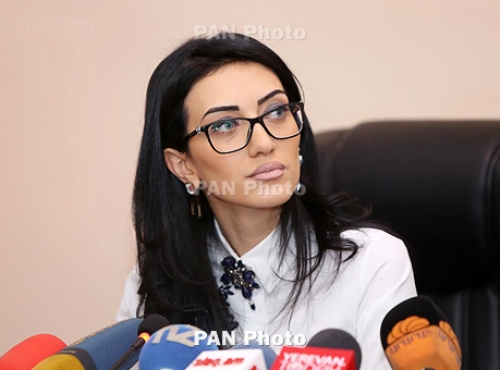














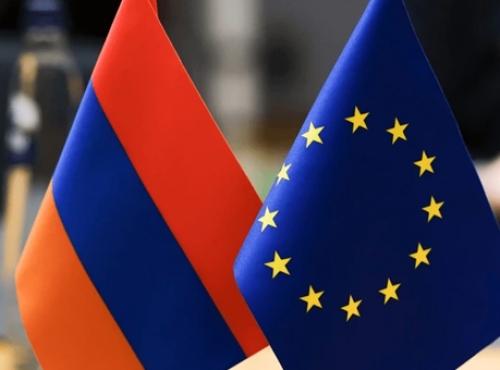
Armenia is moving forward with clear steps toward the goal of visa-free travel, Interior Minister Arpine Sargsyan said in a Facebook message addressed to citizens.
She noted that truly historic progress had been recorded in this direction.
“We are the only country in the world with which the European Union is actively discussing visa liberalization,” Sargsyan said.
The minister noted that after the official launch of the dialogue, Armenia received the action plan in a record-short period and under conditions of high trust, while several days ago European partners presented the first progress report.
“In a number of areas Armenia has demonstrated accelerated progress. That means we have done more than was even expected at this stage. This is about new opportunities for Armenian citizens, closer ties, and being closer to Europe. I assure you that we will continue consistent work, moving step by step toward visa-free travel and dignified mobility,” she said.
On May 5, the European Commission delivered to Armenia the first progress report on implementation of the Visa Liberalization Action Plan. The document recorded the Armenian authorities’ clear political commitment to carrying out reforms necessary for visa liberalization with the EU.
The first report assessed Armenia’s progress in meeting the first group of benchmarks, focusing on document security, border, migration and asylum management, public order and security, external relations, and fundamental rights.
Although little time has passed since the action plan was delivered, the Armenian government has already initiated or planned a significant portion of the required legislative and policy changes, which received high marks from the EU.
In the field of document security, a new law on the state population register was adopted in July 2025, enabling the creation of a unified and secure electronic population registry. At the same time, a public-private partnership agreement was signed to modernize the national biometric identification system.
In the area of border, migration, and asylum management, Armenia developed the 2026-2029 Integrated Border Management Strategy. Progress was also recorded in the digitization of administrative services, including the launch of an electronic citizenship case management system and the digitization of work and residence permits for foreigners.
Regarding public order and security, the report noted that since 2018, Armenia has significantly strengthened and aligned its anti-corruption legal and institutional framework with international standards. The report also referred to the creation of the Crime Statistics and Research Center, as well as a new anti-trafficking program expected to be adopted in 2026.
The European side also positively assessed the creation of a new independent body for personal data protection and the drafting process of the law “On Prevention of and Fight Against Discrimination.” It was also noted that Armenia adopted new legislation on children’s rights protection in 2025.
The report highlighted that the number of Schengen visas issued to Armenian citizens increased from 51,000 in 2019 to 86,300 in 2024, while the share of multiple-entry visas rose to 43.5 percent. At the same time, the visa refusal rate declined.
The Armenia-EU dialogue on visa liberalization officially began in September 2024, while the Action Plan was handed over to Armenia in November 2025. It includes 74 benchmarks implemented in two phases: establishing the legislative and policy framework and ensuring their practical implementation.