


















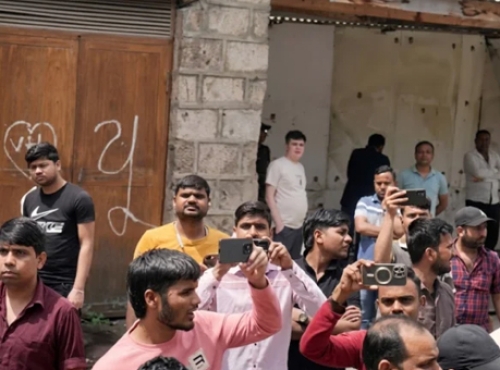
A protest by Indian workers demanding higher wages and improved working conditions at a garment factory in Ijevan ended with one person being detained.
The Investigative Committee said an Indian worker had been detained on charges of interfering with the lawful official activities of a public servant. A pre-trial investigation is underway, according to RFE/RL’s Armenian Service.
Workers at the same factory also staged protests last year over the same demands. Those demonstrations prompted reactions from the Labor Inspectorate and the Human Rights Defender, and even led to a criminal case being launched on charges related to labor exploitation.
The office of the Human Rights Defender issued a statement regarding the protest by Indian workers in Ijevan, noting that the protection of foreigners’ rights remains in focus.
“The protection of foreign nationals’ labor rights is one of the separate areas of activity of the Human Rights Defender. Within the framework of the Defender’s mandate, issues related both to the prevention of workplace discrimination and to other labor rights concerns are regularly addressed.
Following reports circulated in the media on May 13 regarding a strike carried out by ethnic Indian employees in the city of Ijevan, a review was initiated within the Human Rights Defender’s Office in order to address issues falling under the Defender’s mandate.
The issues raised in connection with labor rights were examined by the Defender’s staff and referred to Armenia’s Health and Labor Inspection Body.
At the same time, issues concerning the protection of the rights of foreign nationals deprived of liberty and taken to police stations during the incident on the same day are also at the center of the Human Rights Defender’s attention. Necessary measures are being taken within the scope of the Defender’s mandate,” the statement said.
In 2025, the Labor Inspectorate fined the factory operator, IJ Grand Textile OPT LLC, 8 million drams, but only for delayed wage payments. The state body responsible for monitoring working conditions did not address the problems raised by Indian workers, who described the inhumane conditions in which they worked.
The Indian workers both live and work on the factory premises.