















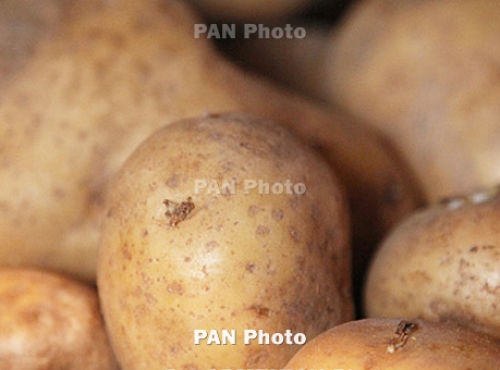
Russia’s Federal Service for Veterinary and Phytosanitary Surveillance (Rosselkhoznadzor) has announced that temporary restrictions on the import of seed crops, eggplants, potatoes, and dried fruits originating from and exported by Armenia will take effect on June 3.
According to the agency, the restrictions will also apply to the transit of these products to other member states of the Eurasian Economic Union (EAEU).
The statement says the measures will remain in force until appropriate mechanisms are developed and implemented to ensure the safety of exported goods.
Rosselkhoznadzor also stated that, in its assessment, the situation reflects structural challenges facing Armenia’s Ministry of Economy and indicates difficulties in carrying out oversight functions over agricultural producers.
The agency further noted that Armenia’s Ministry of Agriculture was dissolved as part of government structural reforms carried out in 2019, with its powers transferred to the Ministry of Economy.
At present, the Ministry of Economy is responsible for developing and implementing state policy in the agro-industrial sector. Its responsibilities include agricultural policy, food processing, livestock breeding, veterinary services, crop production, the use of pesticides and agrochemicals, organic agriculture, agricultural cooperatives and fish farming.
Rosselkhoznadzor previously announced that temporary restrictions on imports of cherries, sweet cherries, apricots, plums, peaches, nectarines and grapes from Armenia took effect on June 2. Earlier restrictions had also been imposed on several vegetable crops exported from Armenia.
Russia has also banned imports of Armenian Jermuk mineral water, flowers, fish products and certain alcoholic beverages.